Introduction :>
The emergence of decentralized finance (DeFi) has transformed how individuals access financial services. Among the pioneering platforms leading this transformation is Aave, a decentralized lending and borrowing protocol that enables users to earn interest on digital assets and access loans without relying on traditional financial institutions. Since its launch, Aave has become one of the most influential and widely adopted projects in the DeFi ecosystem.
What is Aave?
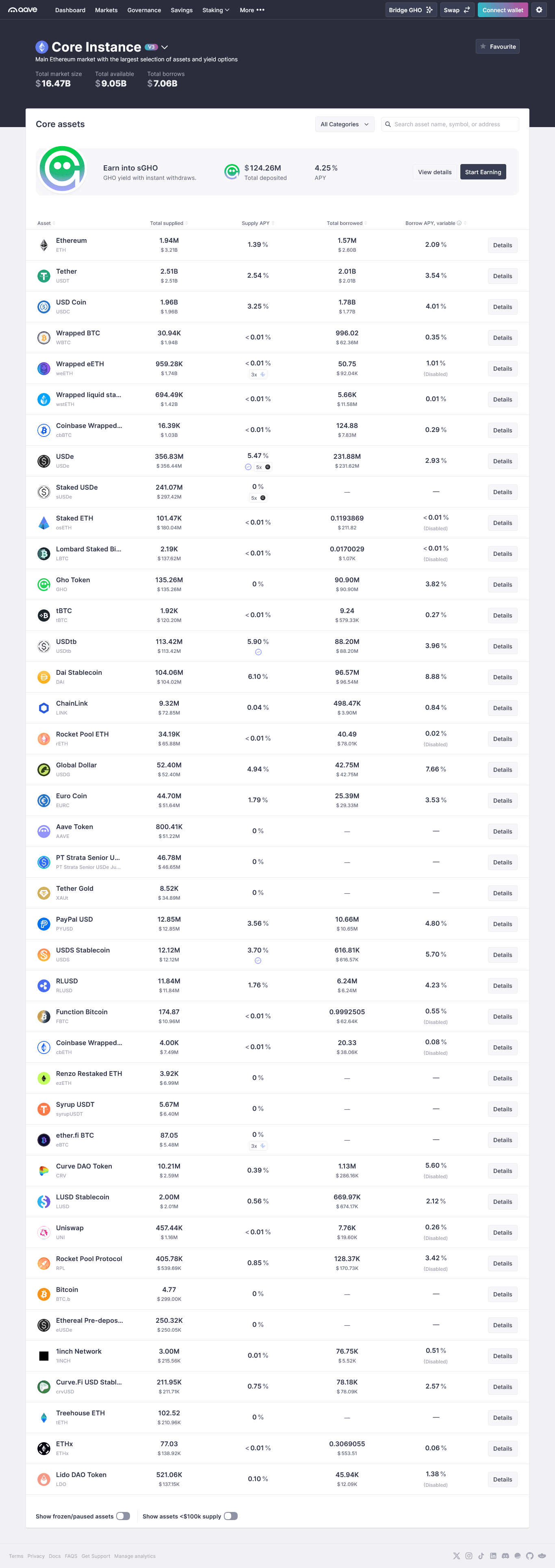
Aave is an open-source, non-custodial liquidity protocol built primarily on the Ethereum blockchain. The platform allows users to deposit cryptocurrencies into liquidity pools and earn interest, while borrowers can obtain loans by providing collateral.
Originally launched in 2017 under the name ETHLend by Stani Kulechov, the project was rebranded as Aave in 2020. The word "Aave" means "ghost" in Finnish, symbolizing the protocol's goal of creating transparent yet decentralized financial services that operate without traditional intermediaries.
How Aave Works ://
Aave operates through smart contracts that automatically manage deposits, loans, interest rates, and collateral requirements. Users interact directly with the protocol rather than through banks or lending institutions.
Lending ://
Individuals can deposit supported cryptocurrencies into Aave's liquidity pools. These deposits are then made available to borrowers. In return, lenders earn interest based on market demand for the asset.
Borrowing ://
Users can borrow digital assets by depositing collateral that exceeds the value of the loan. This over-collateralization helps protect lenders and maintain the protocol's stability.
Interest Rates ://
Aave offers both variable and stable interest rate options. Variable rates fluctuate according to supply and demand, while stable rates provide greater predictability for borrowers.
Key Features of Aave
Flash Loans :\\
One of Aave's most innovative features is the flash loan. Flash loans allow users to borrow funds without collateral, provided the borrowed amount is repaid within the same blockchain transaction. This capability has created opportunities for arbitrage trading, refinancing, and complex financial strategies.
Multi-Asset Support :\\
Aave supports a wide range of cryptocurrencies, including major assets such as Ether, stablecoins, and various ERC-20 tokens. This flexibility makes the platform attractive to diverse users across the crypto ecosystem.
Governance :\\
Aave is governed by holders of its native token, AAVE. Token holders can vote on protocol upgrades, risk parameters, and strategic decisions, ensuring community participation in the platform's development.
Security and Transparency :\\
Because Aave operates through publicly accessible smart contracts, all transactions and protocol activities can be independently verified on the blockchain. The protocol regularly undergoes security audits to reduce vulnerabilities and strengthen user confidence.
Benefits of Using Aave :\\
Aave offers several advantages over traditional lending systems:
1. Permissionless access to financial services.
2. No need for credit checks or extensive documentation.
3. Global accessibility for anyone with an internet connection.
4. Competitive interest rates driven by market dynamics.
5. Continuous operation without banking hours or geographical restrictions.
6. Enhanced transparency through blockchain technology.
Risks and Challenges \\
Despite its advantages, Aave is not without risks.
Smart Contract Risk \\
Although audited, smart contracts may contain vulnerabilities that could potentially be exploited.
Market Volatility \\
Rapid price fluctuations in cryptocurrency markets can lead to liquidations if collateral values fall below required thresholds.
Regulatory Uncertainty \\
As governments around the world continue developing regulations for digital assets and decentralized finance, future compliance requirements may impact DeFi protocols, including Aave.
Liquidity Risks \\
During periods of market stress, liquidity constraints may affect borrowing and lending conditions.
Aave's Impact on Decentralized Finance
Aave has played a significant role in advancing DeFi innovation. Features such as flash loans and decentralized governance have inspired numerous projects across the blockchain ecosystem. By removing intermediaries and enabling direct peer-to-protocol interactions, Aave demonstrates how blockchain technology can create more accessible and efficient financial services.
The protocol has also expanded beyond Ethereum, supporting multiple blockchain networks to improve scalability, reduce transaction costs, and reach a broader user base.
Conclusion ://
Aave represents one of the most successful examples of decentralized finance in action. Through its innovative lending model, community governance structure, and commitment to transparency, the protocol has established itself as a cornerstone of the DeFi ecosystem. While users should remain aware of the risks associated with cryptocurrencies and smart contracts, Aave continues to showcase the potential of blockchain technology to reshape the future of global finance.
As decentralized finance matures, Aave is likely to remain a key player in driving innovation, expanding financial inclusion, and challenging traditional models of banking and lending.

HTML Website Builder